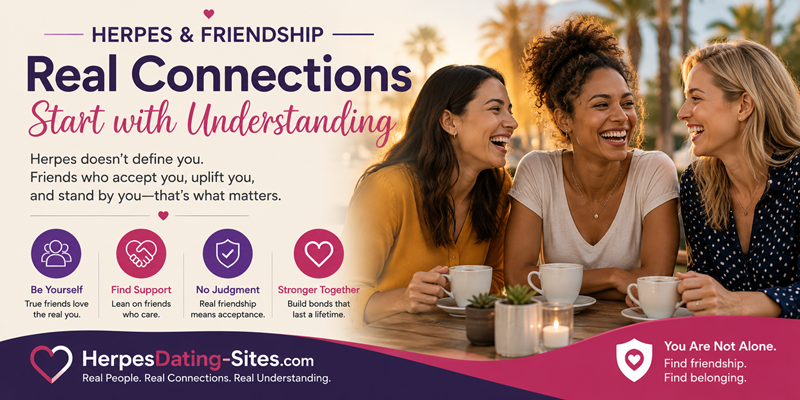
Living With Herpes can feel overwhelming at first. For many people, the hardest part is not the physical symptoms — it is the fear of losing relationships, trust, and connection. After a diagnosis, people often worry that friends will judge them, avoid them, or see them differently forever.
But the reality is often very different.
Strong friendships are built on loyalty, honesty, shared memories, and emotional connection — not a medical condition. Many people discover that real friends stay, support grows stronger, and life continues more normally than expected.
If you are struggling with living with herpes, this guide will help you understand how friendships can survive and even improve after diagnosis. You are not alone, and you do not have to push people away to protect yourself.
Herpes Diagnosis Feels So Emotionally Heavy
One reason herpes feels emotionally difficult is because of stigma. Movies, social media jokes, and misinformation have created fear around the condition for years. That fear often becomes bigger than the actual health issue itself.
Many people diagnosed with HSV immediately think:
- “What if everyone leaves me?”
- “Will my friends think I’m irresponsible?”
- “Should I keep this secret forever?”
- “Will people gossip about me?”
These thoughts are common. They are also a major part of coping with herpes stigma.
The emotional pressure can cause people to isolate themselves even before anyone reacts negatively. Some stop replying to texts, avoid social gatherings, or slowly disappear from friendships because they assume rejection is coming.
In many cases, friends never planned to leave in the first place.
Real Friendship Looks Different After Hard Moments
A herpes diagnosis often reveals who truly cares about you.
Surface-level friendships may fade over time for many reasons in life, but meaningful friendships are usually built to survive difficult conversations. People who genuinely value you care more about your emotional wellbeing than your diagnosis.
Many individuals navigating Friendships After Herpes Diagnosis say they were surprised by how supportive people became once they opened up honestly.
A real friend may not fully understand herpes at first, but supportive people usually respond with empathy when given accurate information.
Some reactions people commonly hear include:
“You’re still the same person.”
“Thank you for trusting me enough to tell me.”
“I’m here for you.”
“I didn’t know herpes was this common.”
These responses matter because they help remove shame and rebuild confidence.
The Fear of Telling Friends
One of the biggest struggles around Herpes Disclosure To Friends is deciding whether you should tell anyone at all.
The truth is: you are not required to disclose your diagnosis to every friend in your life.
Herpes is personal medical information. You choose who deserves access to that part of your story.
Some people tell only one close friend. Others open up to a small trusted circle. Some prefer support groups instead of discussing it with offline friends. Every choice is valid.
Before telling someone, ask yourself:
- Do I trust this person emotionally?
- Have they supported me during difficult times before?
- Am I sharing because I want support, or because I feel pressured?
- Will this conversation help my mental wellbeing?
Choosing the right person matters more than telling many people.
What Happens When Someone Reacts Badly?
Not everyone responds perfectly. Some people react awkwardly because they are uninformed. Others may panic due to myths they learned online.
A negative reaction does not define your worth.
Sometimes people simply need education and time. Sometimes they are not emotionally mature enough to respond well. That says more about them than about you.
Protecting your mental health matters.
If someone mocks, shames, or spreads your private information, creating distance is healthy. A diagnosis should never become a reason to tolerate disrespect.
One difficult reaction should not convince you that all friendships are doomed.
You Are More Than a Diagnosis
People living with HSV are still:
- Good friends
- Loving partners
- Caring parents
- Creative people
- Funny people
- Successful professionals
- Social and attractive individuals
A herpes diagnosis does not erase your personality or value.
The problem is often internalized shame. Many people start seeing themselves differently after diagnosis, even when their friends do not.
Part of Life With Herpes is learning to separate reality from fear.
You are still deserving of friendship, support, love, and community.
The Importance of a Herpes Support Community
One of the most healing things for many people is finding a herpes support community.
Connecting with others who understand your experience can reduce isolation dramatically. Support communities remind people that HSV is extremely common and manageable.
Online forums, private groups, wellness communities, and herpes-positive spaces often help people feel emotionally safe again.
Benefits of support communities include:
- Emotional validation
- Accurate medical information
- Shared coping experiences
- Reduced loneliness
- Confidence rebuilding
- Friendship opportunities
Many lifelong friendships actually begin inside support spaces because people can finally speak honestly without fear of judgment.
Community Voices: What Real People Say
Across online HSV communities, many people share similar experiences after opening up to trusted friends.
One member in a support discussion wrote:
“I spent months thinking everyone would leave me. When I finally told my best friend, she hugged me and asked why I suffered alone for so long.”
Another shared:
“The stigma hurt more than the virus itself. Once I found people who understood HSV, my anxiety started getting better.”
A third person explained:
“I realized I was rejecting myself before anyone else even had the chance to respond.”
Stories like these are common within conversations about Living With Herpes and rebuilding confidence.
Mental Health and Herpes
The emotional side of HSV deserves attention.
People newly diagnosed may experience:
- Anxiety
- Depression
- Shame
- Social withdrawal
- Fear of rejection
- Low self-esteem
That is why emotional care matters just as much as physical care.
Helpful steps include:
- Talking to supportive friends
- Joining HSV support groups
- Speaking with a therapist
- Limiting harmful online content
- Learning factual information about herpes
- Building routines that improve self-confidence
Healing emotionally takes time, but many people eventually regain normal social confidence.
Friendships Can Become Stronger
Sometimes difficult moments deepen emotional bonds.
When you share something vulnerable, and someone responds with care, trust often grows stronger. Friends who support you through difficult periods become safer and more meaningful connections.
Many people navigating Friendships After Herpes Diagnosis discover that authenticity improves their relationships overall.
Instead of pretending everything is fine, they begin building more honest connections.
That honesty can be powerful.
Dating Fear Often Affects Friendships Too
After diagnosis, many people fear rejection in dating and unintentionally pull away from friends as well.
They stop attending events, avoid social interaction, and isolate themselves because they feel “different.”
But friendship is one of the most important forms of healing.
Your social life does not end because of herpes.
You still deserve:
- Group trips
- Birthday parties
- Late-night conversations
- Deep emotional support
- Fun experiences
- New friendships
- Human connection
Do not let fear convince you to disappear from your own life.
FAQ About Herpes and Friendship
Can herpes ruin friendships?
Not usually. Most genuine friendships survive honest conversations and emotional vulnerability. Strong friendships are based on trust and connection, not medical conditions.
Should I tell all my friends I have herpes?
No. Herpes disclosure to friends is a personal decision. You only need to tell people you genuinely trust or feel comfortable sharing with.
Why do I feel isolated after diagnosis?
Many people experience shame and anxiety after diagnosis because of social stigma. Isolation is a common emotional reaction during early stages of adjustment.
How can I find herpes emotional support?
You can find herpes emotional support through therapists, trusted friends, online support groups, wellness communities, and HSV-focused discussion spaces.
Is it normal to fear judgment?
Yes. Fear of rejection is one of the most common emotional struggles connected to coping with herpes stigma.
Can friendships actually improve after opening up?
Yes. Honest conversations often create deeper emotional trust and stronger long-term friendships.
Final Thoughts
A herpes diagnosis can change how you feel about yourself for a while, but it does not erase your worth, personality, or ability to maintain meaningful relationships. The journey of Living With Herpes often includes learning who truly supports you, finding healthier emotional connections, and realizing you were never as alone as you feared.
Real friends do not disappear because life gets difficult.
There will always be people capable of understanding, supporting, and accepting you exactly as you are.
And most importantly — you do not have to lose your people to keep your dignity.
