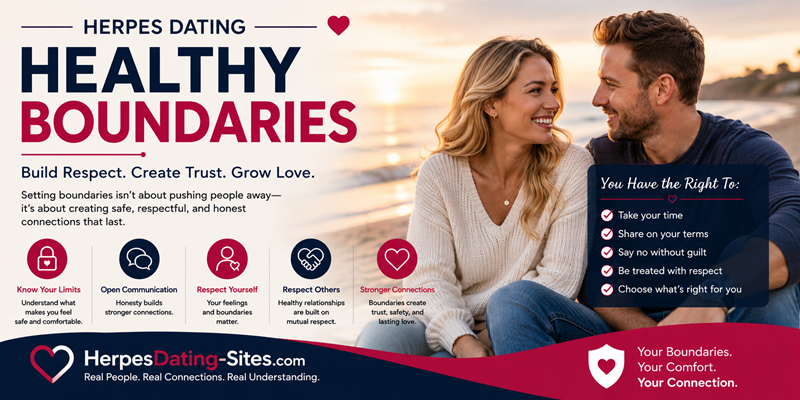
Dating With Herpes can bring emotional challenges that many people never talk about openly. Fear of rejection, loneliness, and stigma often make people question their worth in relationships. But the truth is simple: having HSV does not mean you should accept unhealthy treatment, emotional manipulation, or disrespect just because someone is willing to date you.
One of the most important skills in modern dating is learning how to protect your peace. Strong boundaries help you build confidence, recognize red flags faster, and create healthier relationships with people who genuinely value you. When it comes to herpes dating boundaries, emotional safety matters just
Many people living with HSV eventually realize the biggest challenge is not the diagnosis itself. It is learning how to date without lowering standards out of fear. Healthy love should never come from desperation, guilt, or emotional pressure. It should come from mutual respect, honesty, patience, and trust.
Why Boundaries Matter in Herpes Dating
People living with herpes sometimes enter relationships feeling emotionally vulnerable. After diagnosis, it is common to worry about acceptance or assume dating opportunities will become limited. Because of that fear, some individuals tolerate behavior they normally would never accept.
This is where boundaries become important.
Strong boundaries protect your mental and emotional health. They help you decide what behavior is acceptable and what behavior is harmful. Without boundaries, people can easily become trapped in emotionally draining situations or experience Toxic Matches In Herpes Dating that damage self-esteem even further.
A healthy relationship should never make you feel ashamed of your diagnosis. The right partner will respect your honesty, communicate openly, and value your emotional wellbeing. Boundaries are not about being cold or distant. They are about protecting yourself from situations that harm your confidence and peace of mind.
Understanding Toxic Dating Behavior
Not every bad date is toxic, but certain behaviors should never be ignored. Emotional manipulation often becomes harder to recognize when someone already feels insecure about dating with HSV.
A toxic partner may use subtle comments to make you feel “lucky” they accepted your diagnosis. Some may pressure you emotionally or physically, while others create inconsistency that leaves you anxious and emotionally exhausted.
In contrast, Healthy Herpes Relationships feel emotionally safe.
If someone constantly makes you feel insecure, confused, guilty, or emotionally drained, the problem is not herpes. The problem is the relationship dynamic.
Red Flags You Should Never Ignore
One of the most dangerous dating patterns is ignoring red flags because of fear of rejection. Many people stay in unhealthy situations because they believe finding acceptance again will be difficult. But staying in toxic environments damages emotional health far more than being single ever will.
A major warning sign is emotional manipulation. If someone says things like “Nobody else will accept you” or makes you feel inferior because of HSV, that behavior is unhealthy and controlling. Your diagnosis does not reduce your value.
Another red flag is emotional inconsistency. Some people disappear for days, return with affection, then disappear again. This creates emotional confusion and anxiety. Healthy relationships are built on consistency, not emotional chaos.
Pressure is another important warning sign. Whether emotional or physical, nobody should rush intimacy, commitment, or vulnerability before trust is built. Respectful people understand emotional pacing.
Strong Emotional Boundaries In Dating help people recognize these unhealthy patterns earlier and walk away before emotional damage becomes deeper.
Building Better Boundaries in Dating
Creating healthy boundaries starts with understanding your own emotional needs. Many people know what they dislike in relationships but struggle to communicate those needs clearly.
Healthy boundaries include:
- Expecting respectful communication
- Refusing emotional manipulation
- Taking time before trusting deeply
- Protecting emotional energy
- Walking away from inconsistent behavior
- Prioritizing emotional safety
Good boundaries also mean learning to say no without guilt. Many people living with HSV feel pressure to overcompensate in relationships because they fear losing connection. They become overly available, overly forgiving, or emotionally dependent.
But healthy love does not require self-abandonment.
One of the most important pieces of Herpes Dating Advice is remembering that acceptance should never cost your self-respect.
The Emotional Impact of HSV Stigma
HSV stigma affects confidence more than most people realize. Fear of judgment can create anxiety that influences dating decisions. Some people settle for emotionally unhealthy relationships simply because they believe they have fewer options after diagnosis.
But herpes does not define relationship value.
Many individuals living with HSV eventually discover that confidence changes everything. When people stop viewing themselves as “damaged,” they begin choosing healthier partners and stronger emotional connections.
This is why Herpes Relationship Tips often focus heavily on self-worth and emotional healing rather than only disclosure conversations.
Confidence helps people stop tolerating disrespect.
How to Date with More Emotional Safety
Creating safer dating experiences means protecting both emotional and physical well-being. Honest communication is important, but emotional pacing matters too.
People practicing Dating With Herpes Safely should focus on trust, communication, and mutual respect rather than rushing relationships out of loneliness or fear.
A healthy connection should feel calm, not emotionally exhausting. You should never feel pressured to prove your worth because of your diagnosis.
Pay attention to how someone handles difficult conversations. Respectful people listen carefully, communicate honestly, and support emotional openness without judgment.
Relationships built slowly often become stronger because trust develops naturally over time.
Community Support and Real Experiences
Many people in HSV support communities openly discuss the importance of boundaries in dating. Online forums, private support groups, and herpes dating communities frequently share stories about overcoming emotional insecurity and learning to recognize unhealthy behavior.
One common lesson appears repeatedly in these conversations: confidence improves dating experiences.
People who rebuild self-esteem after diagnosis often become more selective about relationships. They stop chasing validation and begin prioritizing emotional safety instead.
The role of Herpes Support And Dating communities is important because they remind people they are not alone. Shared experiences often help individuals understand that healthy love is still completely possible after diagnosis.
Support systems can also help people identify toxic relationship patterns they may not notice on their own.
Signs of Emotional Growth in Dating
Healing changes the way people approach relationships. Instead of chasing approval, emotionally healthy individuals begin focusing on compatibility, consistency, and respect.
Growth often looks like:
- Walking away from manipulation faster
- Communicating needs clearly
- Feeling comfortable alone
- Expecting mutual effort
- Refusing disrespect
- Valuing emotional peace
Strong Herpes Dating Boundaries are often a reflection of emotional healing. They show that someone values themselves enough to protect their mental health and emotional stability.
Healthy relationships should add peace to your life, not confusion.
Frequently Asked Questions
Can people with herpes still have healthy relationships?
Yes. Thousands of people living with HSV build loving and long-term relationships based on trust, honesty, and communication.
What are common toxic behaviors in herpes dating?
Manipulation, guilt-tripping, emotional inconsistency, pressure, and using your diagnosis against you are major red flags.
Why are boundaries important in herpes dating?
Boundaries protect emotional health, self-esteem, and relationship quality. They help people avoid emotionally unhealthy situations.
How can I feel more confident dating with HSV?
Confidence improves through emotional healing, support communities, education, and remembering that herpes does not define your worth.
Is it okay to leave someone who disrespects my boundaries?
Absolutely. Respect is a basic requirement in every relationship, regardless of HSV status.
Final Thoughts
Dating With Herpes does not mean accepting less than you deserve. The right relationship will never require you to sacrifice your emotional safety, self-worth, or peace of mind.
Strong boundaries help you avoid unhealthy situations while creating space for genuine connection. They allow you to recognize who truly respects you and who only benefits from your insecurity.
Healthy love is built on honesty, trust, consistency, and emotional respect. HSV does not change that.
The more you value yourself, the easier it becomes to recognize relationships that actually deserve your energy.
